SOLD OUT

SOLD OUT
Arkadiusz Krupa oboe
Paulina Sochaj oboe
Andrzej Krzyżanowski flute
Jakub Waszczeniuk trumpet
Ewa Mrowca harpsichord
Sinfonia Varsovia
Anna Sułkowska-Migoń conductor
George Frideric Handel Overture to the Music for the Royal Fireworks HWV 351 [8’]
George Frideric Handel Concerto grosso in G major, Op. 3, No. 3 for flute, strings and basso continuo HWV 314 [9’]
I. Largo e staccato
II. Allegro
III. Adagio
IV. Allegro
Johann Sebastian Bach Sinfonia in G major from the cantata Und es waren Hirten in derselben Gegend, second part of the Christmas Oratorio (Weihnachtsoratorium) BWV 248.2II/1 [6’]
Georg Philipp Telemann Concerto in D major for trumpet, two oboes, strings and basso continuo TWV 53:D2 [10’]
I. Allegro
II. Adagio
III. Aria: Andante
IV. Vivace
George Frideric Handel Music for the Royal Fireworks HWV 351 (selection) [8’]
La Paix: Largo alla Siciliana
La Réjouissance
Menuet II
***
Victor Hely-Hutchinson Carol Symphony (selection, 1927) [10’]
I. Adeste Fideles (Allegro energico)
II. God Rest Ye Merry Gentlemen (Scherzo: Allegro molto moderato)
Patric Standford Vivace (mov. I) from the Symphony No. 2 Christmas Carol (1978) [6’]
Frederick Delius Winter Night – Sleigh Ride (No. 2) from the collection 3 Small Tone-Poems [5’]
Malcolm Arnold Fantasy on Christmas Carols from the music to the film The Holly and the Ivy (arr. Christopher Palmer) [9’]
The Christmas season comes in many shades. For many, it is a moment of joyful spiritual reflection and a time of particular closeness with family. For others, it brings warm memories, or simply a touch of light in the depths of winter. Yet this season can also give rise to more complex emotions, which do not always chime with the prevailing narrative of festivity. This is why music holds such a special place at this time of year – a space in which different experiences and sensibilities may meet. For centuries, it has offered a sense of community, solace, and a sign of hope, whatever meaning each of us finds in these days.
The musical traditions of Christmas are remarkably rich. They encompass ancient liturgical and paraliturgical chants of early-medieval origin, developed over the centuries within art music – including polyphony, from motets through to later cantatas and oratorios. They extend, too, to the carols sung within communities and to the many musical depictions of the Holy Night found in opera, musical theatre and film. In the popular imagination, it is carols and pastorales that have become the very heart of the festive repertoire. Their simple melodies are wedded to words of theological – yet profoundly human – reflection on the miracle of birth and motherhood, and on care and hope.
Handel’s Music for the Royal Fireworks, resplendent in its Baroque grandeur (with the siciliana La Paix, celebrating the Treaty of Aachen of 1748 – a peace so fervently longed for once again amid today’s many conflicts…), his finely wrought concerto grosso inspired by the Italian style, and Telemann’s trumpet concerto, sparkling with brilliance – none is directly linked to the theme of Christmas, yet each brings to the programme something quintessential to the music of this season: majesty and gaudium magnum – great joy. Directly connected with the feast, however, is the charming sinfonia that opens Part II of Bach’s Christmas Oratorio. It evokes the Gospel scene of the shepherds’ homage. The gentle sonorities of the ‘pastoral’ oboes converse with the ‘angelic’ flutes, once again in the pastoral lilt of a siciliana. It is one of the most tender musical depictions of the Nativity night, suffused with peace.
The second half of the concert carries us (mostly) into the twentieth century, where Christmas melodies become the fabric of new orchestral works. Victor Hely-Hutchinson’s Carol Symphony (1927) combines the classical symphonic form with the exceptionally rich English tradition of carols. In the United Kingdom, this piece – a musical icon of the festive season – is widely cherished, yet in Poland it remains almost unknown. Here, the composer treats familiar carol melodies – from the Latin Adeste Fideles to God Rest Ye Merry, Gentlemen – as expansive symphonic themes, developing and transforming them in orchestration full of lustre and in a late-Romantic expressive language.
Another British composer, Patric Standford, in his A Christmas Carol Symphony (1978), written half a century later, likewise draws on well-known carol melodies from across the ages. More than a dozen have been identified, ranging from the sixteenth-century Deck the Halls to the modern American We Wish You a Merry Christmas! He does so, however, in a rather different manner: as a dazzling potpourri, reminiscent in scale and colour of vivid, kaleidoscopically shifting film music. The composer himself recalled that the work grew out of Christmastime games with his children, when he would improvise just such suites of carol melodies for them at the piano.
Winter Night (‘Sleigh Ride’) is one of the early orchestral miniatures by the English neo-Romantic Frederick Delius, conceived as part of a cycle of four seasonal tone poems (three of which survive). The work originated in Leipzig in the late 1880s as a piano piece, Norwegischer Schlittenfahrt, later lost. Delius recalled performing it on Christmas Eve among Norwegian friends, including Edvard Grieg and Christian Sinding. The subsequent orchestral version, left incomplete by the composer, was reconstructed by Sir Thomas Beecham. In its symphonic guise, Winter Night enchants with its delicate vision of a winter landscape bathed in mysterious moonlight, through which a sleigh darts before disappearing into the distance of a snow-swept haze.
– Piotr Maculewicz
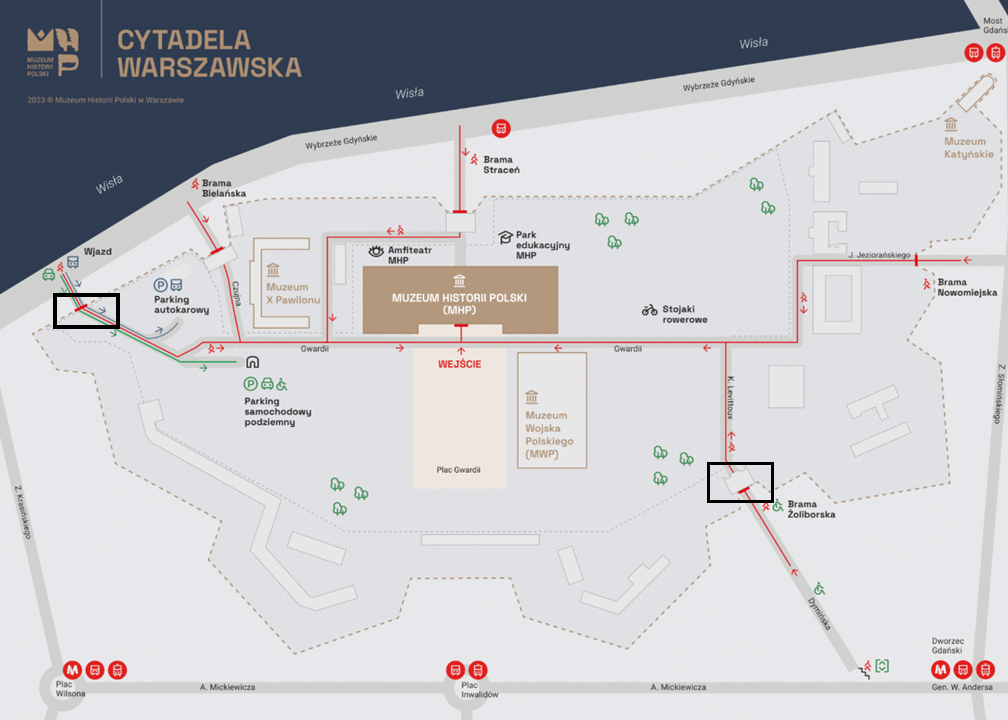
Recommended entrances to the Citadel for pedestrians:
– Brama Żoliborska, 13 Dymińska Street – entrance accessible for people with reduced mobility;
– Brama Wiślana, entrance from Wybrzeże Gdyńskie.
Exits from the Citadel area after the concert only through:
– Brama Żoliborska, 13 Dymińska Street – entrance accessible for people with reduced mobility;
– Brama Wiślana, entrance from Wybrzeże Gdyńskie.